
Folks Who Shine!
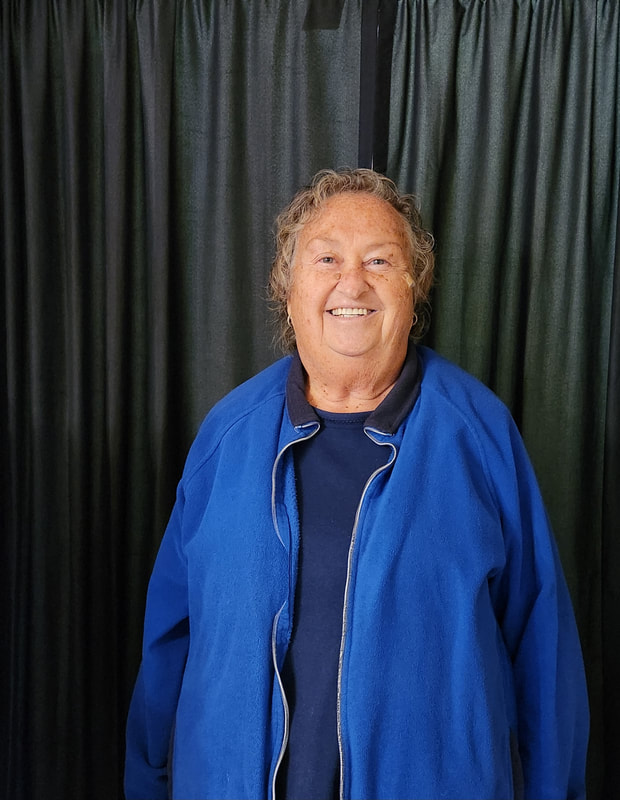
REC CENTER PROGRESS: Much is going on at the Gilmer County Recreation Center these days, thanks to the leadership of Mrs. Reta Kight and her devoted staff. Although retired from public service and private business in recent years, she stepped up to the plate when the Gilmer County Commission was lacking for securing an adequate executive director for the site. Upon taking charge, she and her crew have cleaned up the site greatly, because the once abandoned grounds had been littered by illegal local garbage dumpers. That's all history now, and under her direction, the facility is ready for the committee's fundraisers, CEOS/WVU Extension events, and youth gatherings of several different types, notably 4-H Summer Camps and the Annual Farm Show.
As a former County Commissioner and the current President of the Little Kanawha Parkways Commission, Mrs. Reta Kight knows how to get things done at the local center, and for the ideas and energy that she and her small staff have put in to upgrading it, she and her assistants certainly merit this week's "Folks Who Shine" honor!
David H. Corcoran, Sr., Publisher-Sr. Editor
(Staff photo by Sierra Wood)
As a former County Commissioner and the current President of the Little Kanawha Parkways Commission, Mrs. Reta Kight knows how to get things done at the local center, and for the ideas and energy that she and her small staff have put in to upgrading it, she and her assistants certainly merit this week's "Folks Who Shine" honor!
David H. Corcoran, Sr., Publisher-Sr. Editor
(Staff photo by Sierra Wood)
This Week in WV History
Dec. 8, 1911: “Wally” Barron was born. Barron, West Virginia’s 26th governor, achieved a remarkable record of legislative success during his term, but his accomplishments were overshadowed by the fact that he was the first governor in state history to be indicted or convicted of a major crime.
Dec. 9, 1829: West Virginia’s fourth governor, John Jeremiah Jacob, was born in Hampshire County. He was the first governor born within the area that became West Virginia and the first Democratic governor of the state.
Dec. 9, 1932: Songwriter, musician, playwright, humorist, and poet Billy Edd Wheeler was born in Whitesville.
Dec. 10, 1841: Logan County preacher “Uncle Dyke” Garrett was born on Big Creek. His greatest fame was for converting and baptizing Devil Anse Hatfield in Main Island Creek in 1911.
Dec. 10, 1949: The first class of 20 cadets graduated from the West Virginia State Police Academy in Institute. The State Police purchased property for the academy on a hilltop overlooking Institute from Kanawha County for about $3,200. Construction began in 1948, and the building was completed the next year.
Dec. 11, 1905: ‘Pare’’ Lorentz, known as “FDR’s filmmaker,” was born in Clarksburg. In 1933, Lorentz created The Roosevelt Year: 1933, a pictorial review of FDR’s first year in the White House.
Dec. 12, 1931: Attorney George Daugherty, better known as the comic singer and songwriter “The Earl of Elkview,” was born upstairs over a Mannington silent movie house.
Dec. 12, 1942: Internationally known jazz pianist and recording artist Bob Thompson was born in Jamaica, Queens, New York. He studied music at West Virginia State College (now University) and is the house pianist on the Mountain Stage radio program.
Dec. 13, 1861: The Battle of Allegheny Mountain, one of the bloodiest conflicts of the Civil War’s first year, took place in Pocahontas County.
Dec. 13, 1926: Wheeling radio station WWVA-AM began broadcasting. The 50-watt station operated from the basement of John Stroebel’s house for most of its first year. Stroebel was a physics teacher and wireless pioneer.
Dec. 14, 1857: Coal operator Justus Collins was born. He owned coal mines at Glen Jean and Whipple, and the octagonal Whipple company store survives today as a local landmark.
Dec. 8, 1911: “Wally” Barron was born. Barron, West Virginia’s 26th governor, achieved a remarkable record of legislative success during his term, but his accomplishments were overshadowed by the fact that he was the first governor in state history to be indicted or convicted of a major crime.
Dec. 9, 1829: West Virginia’s fourth governor, John Jeremiah Jacob, was born in Hampshire County. He was the first governor born within the area that became West Virginia and the first Democratic governor of the state.
Dec. 9, 1932: Songwriter, musician, playwright, humorist, and poet Billy Edd Wheeler was born in Whitesville.
Dec. 10, 1841: Logan County preacher “Uncle Dyke” Garrett was born on Big Creek. His greatest fame was for converting and baptizing Devil Anse Hatfield in Main Island Creek in 1911.
Dec. 10, 1949: The first class of 20 cadets graduated from the West Virginia State Police Academy in Institute. The State Police purchased property for the academy on a hilltop overlooking Institute from Kanawha County for about $3,200. Construction began in 1948, and the building was completed the next year.
Dec. 11, 1905: ‘Pare’’ Lorentz, known as “FDR’s filmmaker,” was born in Clarksburg. In 1933, Lorentz created The Roosevelt Year: 1933, a pictorial review of FDR’s first year in the White House.
Dec. 12, 1931: Attorney George Daugherty, better known as the comic singer and songwriter “The Earl of Elkview,” was born upstairs over a Mannington silent movie house.
Dec. 12, 1942: Internationally known jazz pianist and recording artist Bob Thompson was born in Jamaica, Queens, New York. He studied music at West Virginia State College (now University) and is the house pianist on the Mountain Stage radio program.
Dec. 13, 1861: The Battle of Allegheny Mountain, one of the bloodiest conflicts of the Civil War’s first year, took place in Pocahontas County.
Dec. 13, 1926: Wheeling radio station WWVA-AM began broadcasting. The 50-watt station operated from the basement of John Stroebel’s house for most of its first year. Stroebel was a physics teacher and wireless pioneer.
Dec. 14, 1857: Coal operator Justus Collins was born. He owned coal mines at Glen Jean and Whipple, and the octagonal Whipple company store survives today as a local landmark.

Promoting the development of Gilmer County in the best interest of its' citizens.
Click the ad above to find out more!
Click the ad above to find out more!
Catch up with our Columnists
|
Most Memorable Christmas
By: Jeanette Riffle Hubby and I were sitting around after lunch talking about Christmas when we were growing up and he said he could remember his first Christmas at the Shock log cabin. His aunt, Susie Riffle Perrine, and Ugie Stump were talking about making fruit cakes. Ugie wanted to age them with rum ,so Uncle Ralph Perrine went to the store and got some. This had to be done a good while before Christmas. Ugie and Aunt Susie used their canned fruits. He remembers seeing them emptying quart jars of fruit into a big pan. He can’t remember eating them because he wasn’t quite three, yet,. He said they were ready by Christmas and maybe he didn’t like them as he was so young, but when he grew up, he sure did like them. I got hold of a recipe when we lived in Michigan and started aging my fruit cakes in September. I wrapped them in plastic wrap and then foil over that and stored them in a cold, dark place. He said they were so much better than store bought ones. I remember wanting a walking doll for Christmas one year and I got a big doll that stood up on the floor, but it didn’t walk. Papaw Warner got it and hid it over in the garage that went from the road out over the creek. The garage was across the road from our house. Dad didn’t trust it and didn’t park his Studebaker over there. He just parked down by the front steps that led up to our yard. He kept warning me not to go in that garage because I might fall through to the creek below. It all made sense after I got the doll on Christmas morning and I overheard them talking about Papaw hiding it. Dad didn’t want me going over there and finding that big box with the doll in it. It was the prettiest doll I ever had. Blue dress, blue bonnet, blue eyes and blond hair. Best I remember she had blue socks and white shoes. Mom asked me what I wanted to name her and I said, “Baby Blue Eyes.” She said , “How about Brenda?” So, I settled on that. I don’t know what ever happened to that doll but I expect Mom gave it to a needy child after I got married and left home. She was always helping the needy ones. I will close for this time. We were thankful that none of us were sick at Thanksgiving and we had a nice visit with our son and granddaughter . My middle brother, Roger, his wife, Marina, and their oldest daughter, Sherry and her son came over the hill to see us. Sherry is a nurse practitioner at a cancer clinic down in North Carolina. I hope no one is sick at Christmas. There are a lot of viruses going around still yet. Take care and God bless ! Turkey Coma Over The remnants of our Thanksgiving turkey are on ice and we are getting ready for Christmas. I sent my first Christmas card before Thanksgiving. I answered a letter from a pen pal of mine and put it in a Christmas card. I don’t send as many cards as I used to, but I need to get started on them. The out of state ones go first. We had a nice Thanksgiving. Our son and granddaughter drove down from Michigan on Wednesday before Thanksgiving and stayed three nights with us. My brother, Roger Stewart, and wife, Marina, came for a visit the day after Thanksgiving. Their oldest daughter, Sherry Lynn, and her son, Noah, were up from North Carolina and they came too. Our granddaughter kept everyone laughing. She likes to tell funny things and she out did herself this time. The nice thing was that no one was sick. My husband is well from his virus and my sinus infection is on the run with the antibiotics, so we were able to have company. We have heard of so much sickness and some folks were not able to be with their loved ones. A lot of people have flu and we are hearing that it is a bad one this year. I have enjoyed staying in where it is warm on the cold days and drinking hot chocolate and hot tea with honey. I have an immunity gel that I mix up and keep in the fridge. I pour honey over lemon wedges, and grated ginger root , in a glass bowl with a lid. You can make a tea out of that or put a heaping teaspoon of it in a cup of black tea. I like it in the tea. Our dog is missing the kids. Shelby gives him a lot of attention and he gets scraps from the table of special foods when they come home. When they leave he tries to get in the car and go with them. He wouldn’t be happy with them though because he wouldn’t have any critters to chase. They were laughing about him giving Shelby’s cat a merry time if he went home with them. Until next time, everyone be safe and stay well. Take care and God bless ! |
Cedarville News
By: Joann Woodyard Holiday House turned out to be successful Friday at the Gilmer County Recreation Center, I think. Our CEO's Club was very pleased how well we did and hope the others did as well. There were a lot of nice items for sale. Hopefully the vendors did well Friday and also at the craft sale on Saturday. It is beginning to look like Christmas with the weather and some decorations up here and there. My 4-H Club had our Christmas gift exchange and dinner Sunday evening. An enjoyable evening was had by all. The Senior Center has a trip planned soon to go to Point Pleasant to see the lights. They are good. We have been there before several years ago with our CEO's Club when Bonnie Drake was living. We sure miss her and many others who have gone on. Wayne and I recently rejoined the Historical Organization. It is a very good one to be a member of, yet we don't get to go very often anymore. Our sympathy goes out to the Cottrill family on the loss of their loved one, Dee. He will be missed by his family and friends. Just Smile If the weather looks like rain - Smile. When you feel you must complain - Smile. Do not care if things seem gray, Soon there'll come a brighter day. You will find that it will pay To smile. If the world looks sad and drear - Smile. Banish every thought of fear - Smile. Do the very best you can. Play your part now like a man. Make each day a better plan - and smile. If you taste lifeÕs bitter cup - Smile. Should the doctors give you up - Smile. You are very far from dead. Waste no time in useless dread. Put your trust in God instead - And Smile. Grenville Kleiser |
Myra’s Musings!
Check out her column in this week's edition!
Check out her column in this week's edition!